You’ve got the pack. You’ve got the gear. You’ve studied the maps. Now, what are you going to eat? Food is a critical and yet sometimes confounding piece of the backpacking puzzle. In this article, I’ll attempt to shed some light on backcountry cuisine.
Types of Backpacking Food
Hypothetically, you can bring any food you want on a backpacking trip. However, there are some limiting factors that you should consider. First is spoilage. Raw bacon is not going to last very long in warm weather, making it a poor choice for a week-long, late-summer backpacking trip. You need to ensure that whatever food you bring is going to stay edible until you consume it.
The next consideration is weight. Canned food is convenient and takes care of the spoilage issue, but it’s also heavy. For example, canned soup might be great for an overnight camping trip, but it’s not ideal for an extended excursion.
Finally, consider how you’re going to prepare the food. The most common cooking method for backpacking is boiling. Most backcountry cooking systems don’t have the capability to grill, saute, or even fry, so try to stick to foods that involve adding water and heating.
How Much Food
In high school, I spent a week backpacking on the Olympic Peninsula with some guys from my Boy Scout troop. Over the course of the trip, I lost five pounds. This may not sound like a lot, but at the time it was around 4% of my already lean body weight. By the end of the trip, I was eating Nutella with a spoon, straight from the jar, just trying to satisfy my hunger (not that you really need an excuse to eat Nutella with a spoon).
When considering how much food to bring on a backpacking trip, you need to account for the extra energy you expend hiking. Think about how much food (or calories, if that helps) you eat in a normal day, and then add more. This involves some trial and error, as well as paying close attention to your body. If you’re planning a long trip, go on a few day hikes or overnight trips beforehand to help determine how much food you’ll actually want during a long day of backpacking.
Also, consider your nutritional needs. Backpacking is an athletic endeavor, and you need to feed yourself accordingly. For example, consider your protein requirements. To properly recover, you will need to eat significantly more protein than you would during a normal day in school or at the office. The same goes for salt: you’ll lose a lot of salt by sweating while you hike. Make sure your food choices provide some salt to replenish your electrolytes and stave off cramps.
Cooking
As I mentioned earlier, boiling is the most common method of cooking in the backcountry. As a kid, I imagined cooking most of my backwoods meals over an open flame, cowboy style. Unfortunately, campfire cooking can be messy, labor intensive, and is often banned in pristine wilderness areas. When choosing backpacking food, think of foods that you can add water to and boil.
With a folding canister stove and lightweight pot, you’ll be prepared for 80% of backpacking cooking situations. My go-to setup for up to two people is an MSR Pocket Rocket 2 stove paired with a thin, 26oz, anodized aluminum pot. Stay away from thick and heavy cookware when using a canister stove. Backpacking stoves aren’t robust enough to operate efficiently with your mom’s cast iron. Opt for thin materials such as anodized aluminum, lightweight stainless steel, or titanium instead.
As a side note, it’s always nice to have some extra foods that you don’t have to cook at all. Some cheese, jerky or summer sausage, muffins, or dried fruit all make nice, easy additions to any meal.
Basic Menu Ideas
So what might a backpacking menu look like? If you want (read: can afford it), you can go all out with dehydrated foods from Mountain House or Peak Refuel, protein bars, and jerky. Otherwise, here are a few easily accessible ideas to get you started.
Breakfast 1: Granola in a sturdy Ziploc bag with dried milk. Just add water! Supplement with fresh or dried fruit, jerky, bars, and easy beverages like instant coffee or cocoa.
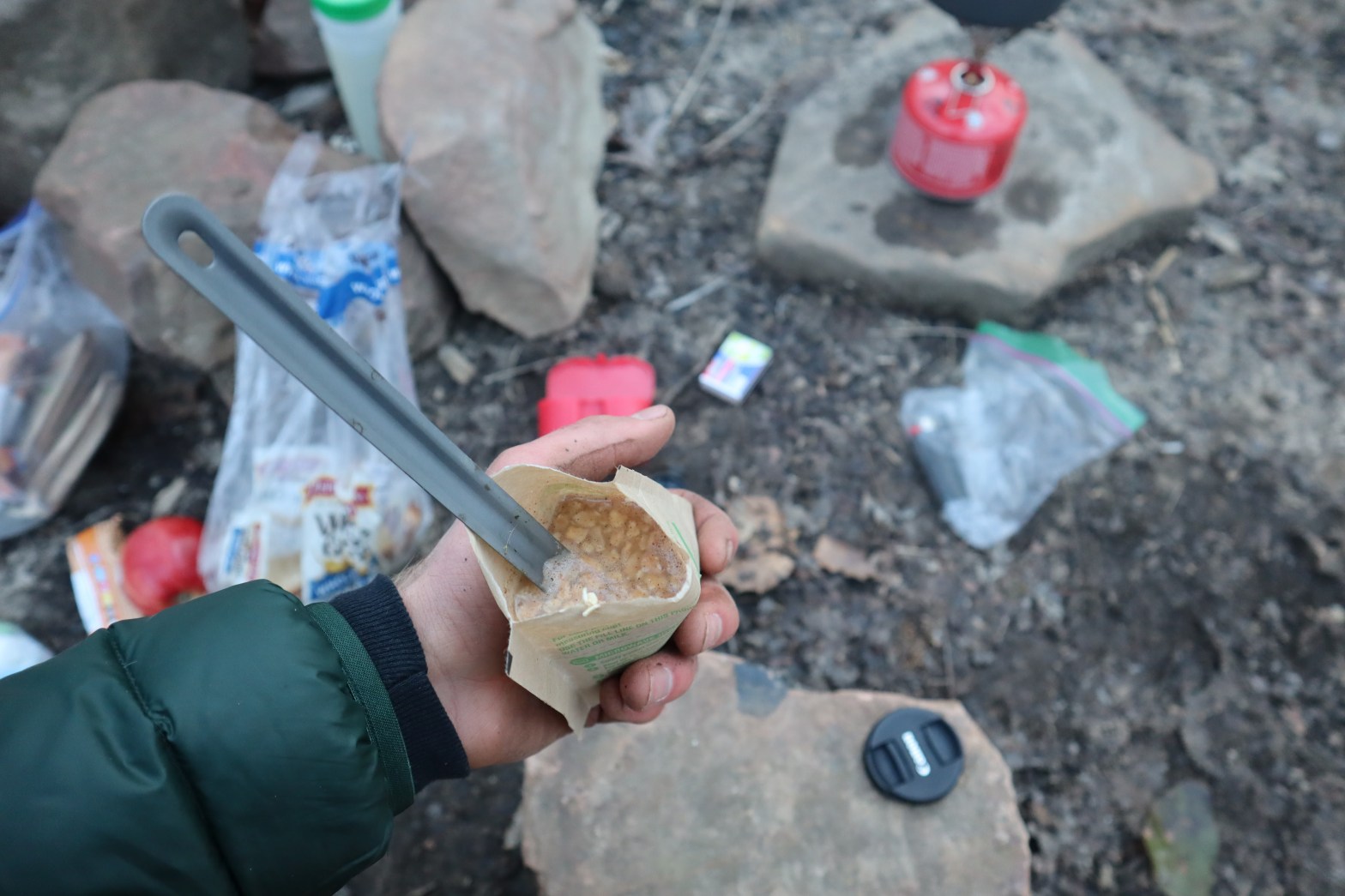
Breakfast 2: Instant oatmeal with peanut butter. You can even eat instant oatmeal from the little bag, just don’t burn your fingers.
Lunch 1: Salami and cream cheese bagel sandwich. You can really substitute any hardy sandwich, just skip the lettuce or other ingredients that will go bad quickly. Supplement with trail mix, string cheese, summer sausage, and bars.
Lunch 2: Tuna in a pouch, an apple, and some cheese. Throw a drink mix (Crystal Light is a classic) in your water bottle to keep things fresh. The idea with both these lunch options is that you don’t have to cook in the middle of your day. In fact, some people opt to not bring a specific lunch item at all. Instead they just “graze” on snacks, eating as they get hungry.
Dinner 1: Knorr rice side with a can or pouch of chicken for protein. Add a Snickers bar for dessert!
Dinner 2: On shorter trips, I’ve made pasta dishes beforehand and slopped them into a ziplock bag. Then, just pour the food into your pot and reheat.
Snacks: Besides providing calories and nutrition, snacks are great for morale. Trail mixes, dried fruit, jerky, summer sausage, cheese, and bars all make great snacks. I used to go on an annual igloo camping trip with friends on Mt. Rainier. Beforehand, I would make a big batch of Muddy Buddies to snack on and share. Maybe not the healthiest option, but the extra calories kept me warm and my Buddies kept me happy.
What’s your favorite backpacking meal? Comment below!
 Persistence Outdoors