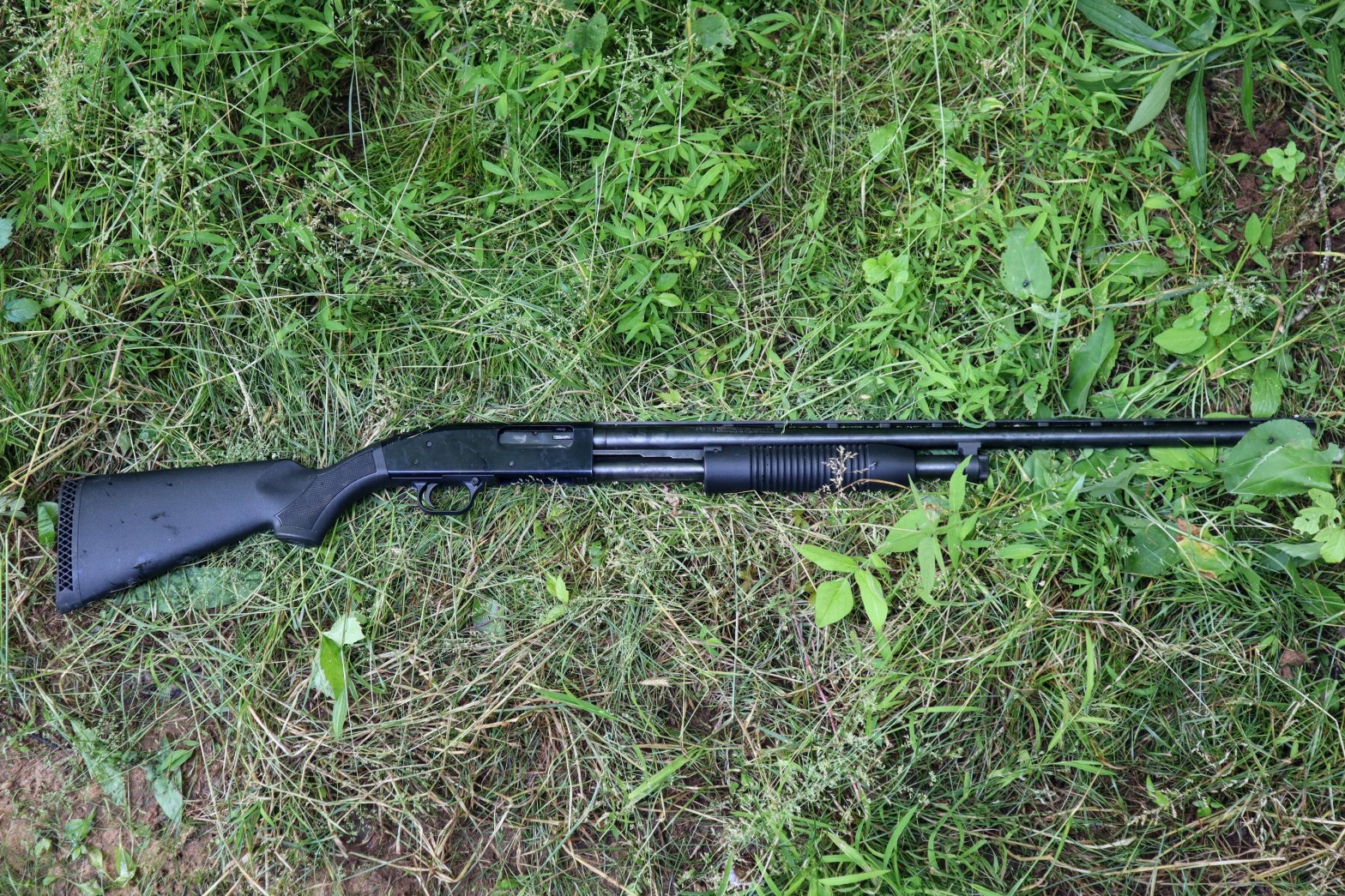
I purchased a Mossberg Maverick 88 two years ago when cash was tight. Originally, I was searching for a Mossberg 500, a model my dad owns and I’m somewhat familiar with. At the time, the price of the Mossberg 500 was trending higher than I wanted to pay, so I settled for a Maverick 88.
The Maverick 88 is regarded as an economy version of the Mossberg 500. I often think of it as a “great little gun,” but in reality, it’s a full-size, fully functional, duty-ready shotgun. Some of the Maverick’s parts are manufactured outside the US to save money, but the final product is assembled in Eagle Pass, Texas. (Eagle Pass is located in Maverick County, hence the name.) Here are my observations after two years of use.
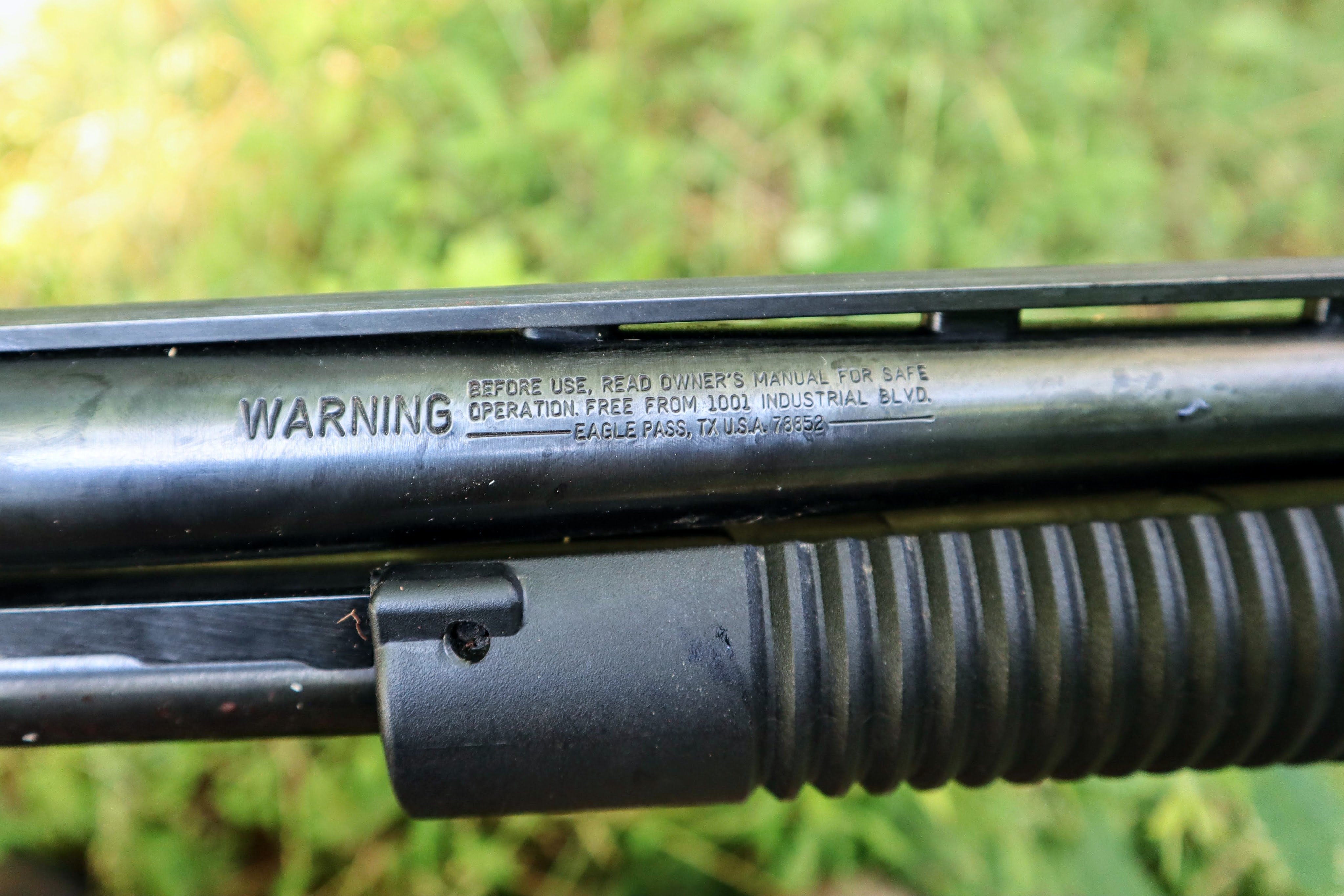
Test Gun Specs
- Guage: 12
- Action: pump
- Capacity: 5+1
- Chamber: 3″
- Barrel: vent rib, 28″
- Choke: M, F
- Sight: dual bead
- Length: 47.75″
- Length of Pull: 14.5″
- Weight: 7lbs
- MSRP: $262
Construction
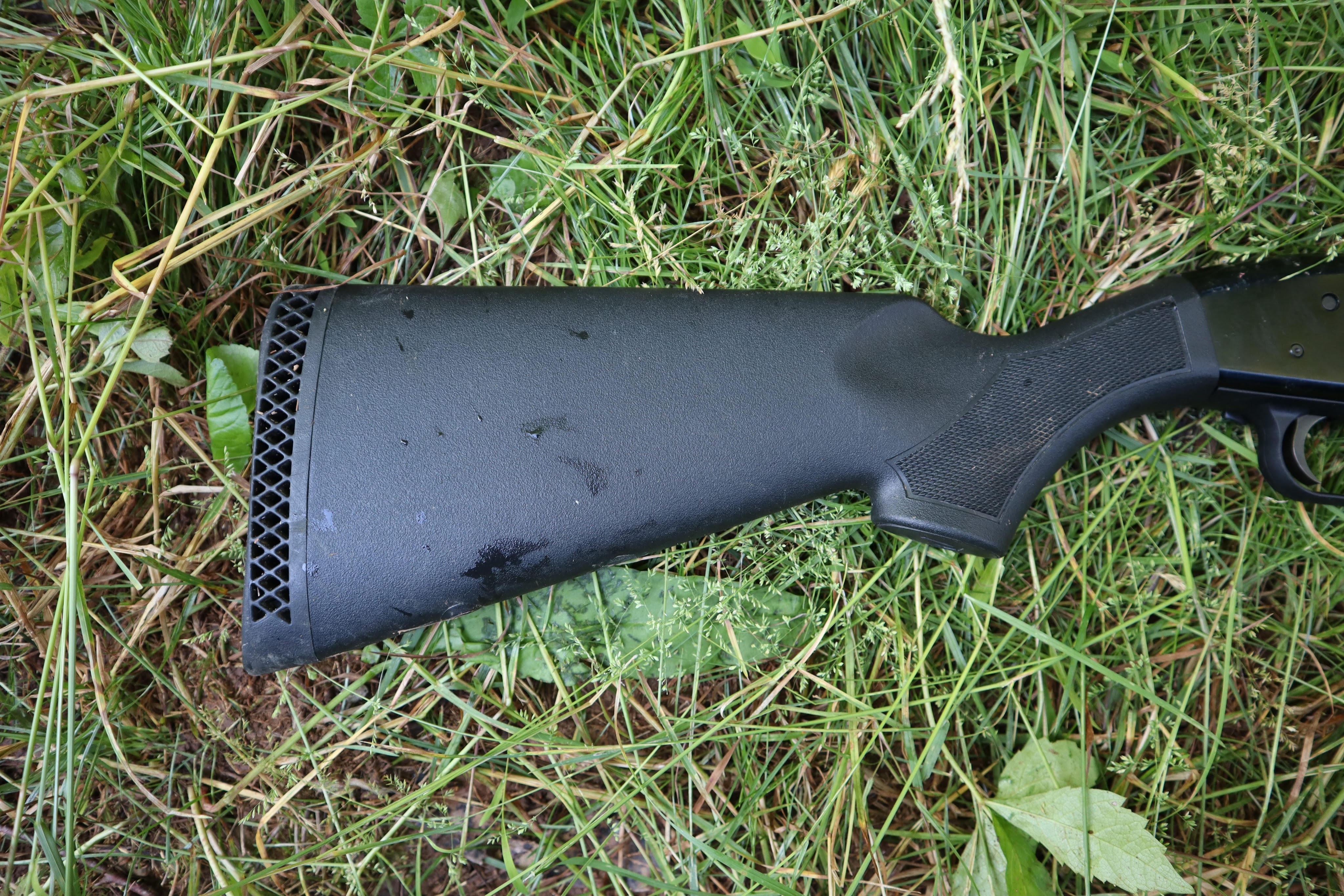
The Maverick 88 is about as utilitarian as it gets. With a blued steel barrel and a plastic forend and stock, there’s nothing fancy about this gun. When you pick it up, it feels cheap. That’s because it is. There’s some play between the hollow stock and the receiver, and the trigger guard and cross-bolt safety are made of hard plastic. The one redeeming construction feature is the inclusion of two metal action bars. The dual action bars increase the firearm’s durability and ensure it will function reliably.
Upon shouldering the gun, a few things stand out. The screw-in beads on the vent-rib barrel of my gun are slightly out of alignment. Removing the middle bead cuts the distraction, but it’s bothersome nonetheless. On the plus side, the gun fits my average, 5′ 10″ frame very well, and the comb height allows me to maintain a cheek weld while sighting down the barrel. The gun has classic ergonomics and comes fitted with a squishy, latticed rubber recoil pad. I find the gun perfectly comfortable to shoot with normal loads.
Function
The Maverick 88 functions better than it should considering its price point. The pump action feels equivalent to a Mossberg 500. It’s extremely reliable and doesn’t catch. Shells eject every time, and I hardly notice the action in the field. The curved trigger is basic and boring. It has significant creep and a heavy, non-adjustable break. It’s not designed to deliver top-of-the-line performance, but it does its job.
The Maverick is compatible with a variety of different barrels, including Mossberg 500 barrels. Both guns can be fitted with 28″ all-purpose barrels, 24″ slug barrels (rifled or smooth), 18.5″ security barrels, and others. The barrels are easy to change by hand without any tools. Maverick 88 stocks are interchangeable and compatible with Mossberg 500 stocks as well. Such versatility allows shooters to tackle any challenge with a Maverick 88 while still coming in under budget.
Pattern and Accuracy
I haven’t intentionally patterned this gun, but as a couple of turkeys, numerous squirrels, and a handful of doves will attest: it shoots where I point it. I’ve had good results with a variety of ammo, ranging from magnum turkey loads to dove shot. The 28″, all-purpose barrel is compatible with a variety of screw-in chokes from Mossberg and other providers. Once again, anything advertised for the Mossberg 500 will fit perfectly.
Out of curiosity, I shot a few one-ounce, hollow-point slugs offhand at 50 yards. I was pleased to find I could hit an eight-inch circle using only the bead sight. It wasn’t a great group, but, in my defense, it also wasn’t a scientific endeavor. With a rifle sight and some practice, I’m sure this gun would be sufficiently accurate for deer hunting within 100 yards.
Mossberg 500 vs. Maverick 88
The greatest differentiator between the Mossberg 500 and the Maverick 88 is the potential for customization. The Mossberg 500 comes with an easily interchangeable forend that is attached with screws. The Maverick’s forend is pinned, and therefore not interchangeable. Additionally, newer Mossberg 500 receivers come drilled and tapped for adding scope bases. Maverick receivers do not. Finally, the Mossberg 500 is offered in a variety of wood, full-finish camo, and synthetic variations. The 88 is only offered with black, brown, or camo plastic, and the receivers and barrels all have the same, shiny blued finish.
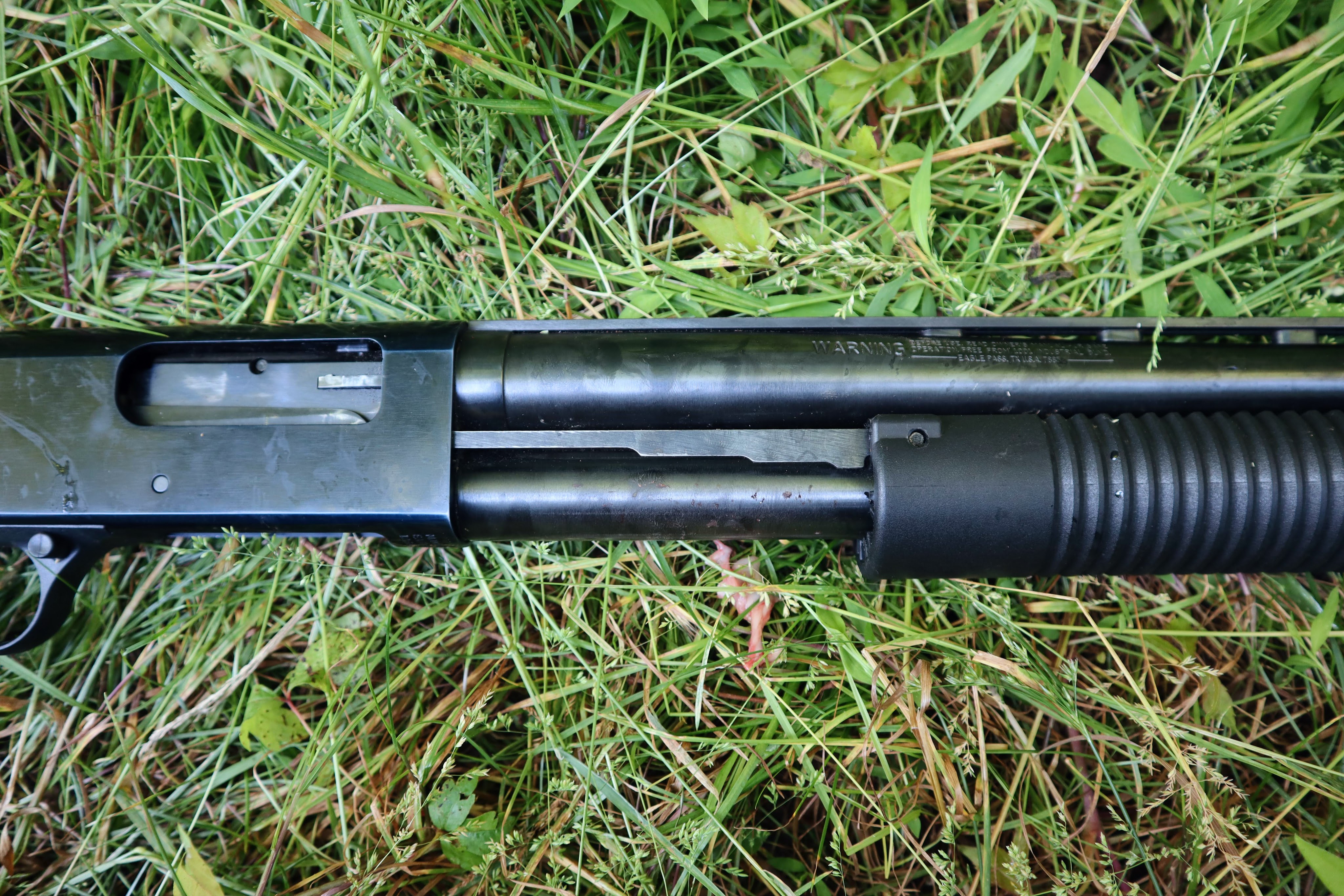
Another apparent difference is the location of the safety: the Mossberg 500 has a tang safety on the top of the receiver, while the Maverick has a cross-bolt safety located near the trigger. The tang safety has a couple advantages: first, you can see whether your safety is on or off without having to unshoulder the gun. Second, the tang safety is ambidextrous. These features make the Mossberg 500 slightly more enjoyable to operate.
Value
Despite its utilitarian, unexciting design, the Maverick 88 delivers massive value for the budget-concious shooter. The 12 gauge, black synthetic, “all-purpose” model with a 28″ barrel retails for only $240 online, undercutting the Mossberg 500 and equivalent Remington 870 by $100-200. For hunting purposes, the Maverick 88 will render largely the same performance as either of those guns at a much more affordable price point. The Maverick won’t stoke your ego, but if you just want to get in the field, or are looking for a backup weapon, the Maverick is the way to go.
Would you feel comfortable with a budget shotgun? Comment below!
 Persistence Outdoors